 VBIT Hong Kong


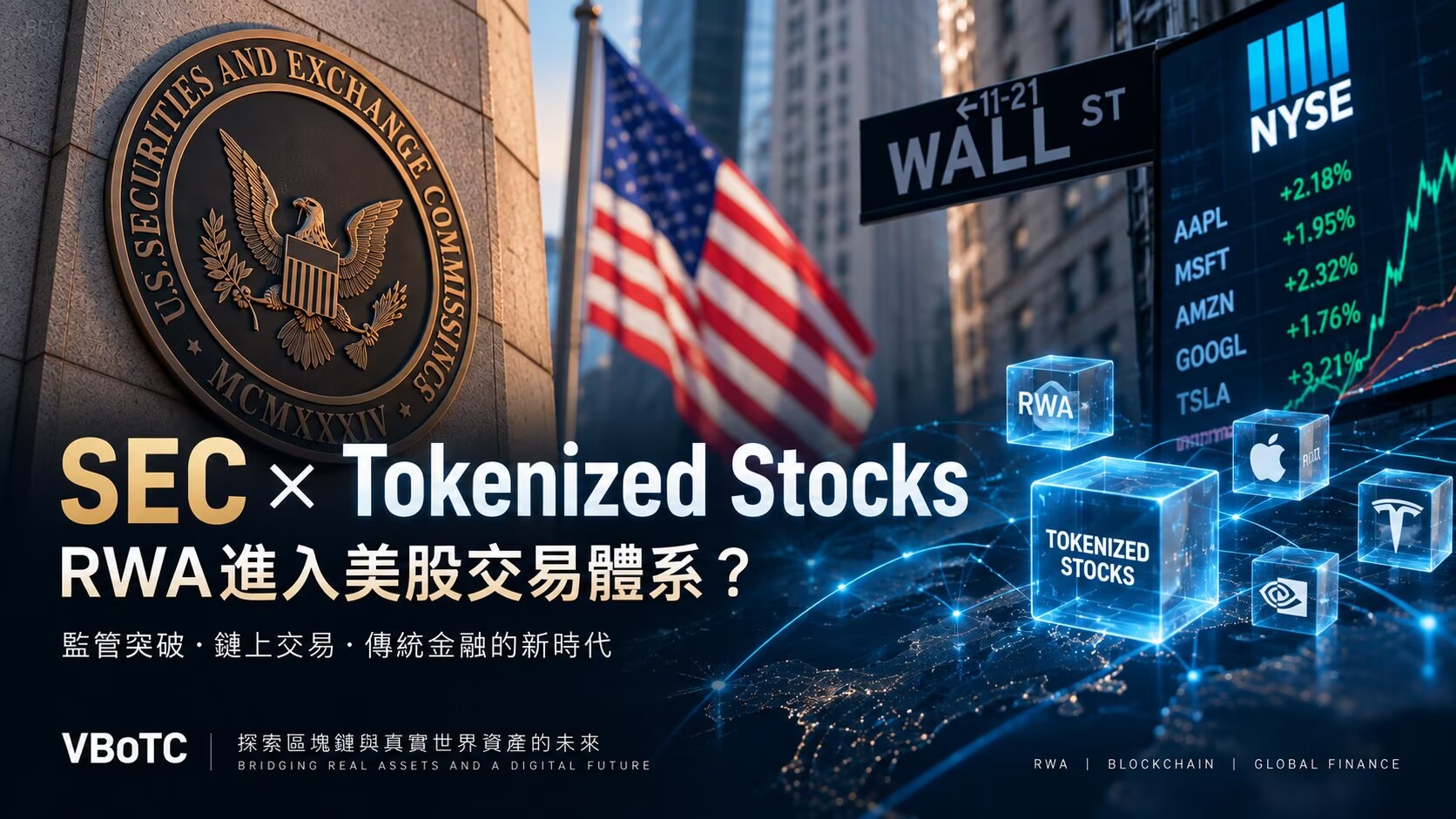
On 17 September 2026, the SEC introduced an Innovation Exemption allowing certain Tokenized Securities Venues (TSVs) to trade tokenised NMS stocks using on-chain automated market makers and liquidity pools, subject to restrictions and investor protections.
This is not blanket approval for tokenised US equities or unrestricted access for all on-chain stock platforms. It opens a controlled, temporary regulatory channel with explicit boundaries. For RWA, the significance is that tokenisation is reaching secondary trading mechanisms for publicly listed equities, rather than merely adding another on-chain product.
What does the Innovation Exemption permit?
The SEC order addresses two obstacles. First, eligible TSVs may temporarily be exempt from the Securities Exchange Act of 1934 definition of an exchange, enabling permissioned AMM liquidity-pool trading without operating as traditional national exchanges or alternative trading systems. Second, certain liquidity providers supplying tokenised stocks from their own capital with market-making characteristics may receive conditional temporary exemptions from the dealer definition.
A key design feature combines verified, permissioned participants with public, permissionless distributed ledgers and public, auditable smart contracts. Rather than moving US equities into completely anonymous, unrestricted DeFi, the SEC is testing a supervised layer between compliant access and public-chain infrastructure.
The core asset is Tokenized NMS Stock, a distributed-ledger representation of equities in the US National Market System. The order excludes certain instruments such as warrants and requires TSVs to halt tokenised trading when the underlying traditional stock is suspended.
Tokenised stocks are not simply crypto tokens tracking share prices
The SEC distinguishes genuine tokenised shares from synthetic price exposure. Eligible stocks may be tokenised by the issuer, an appointed institution or an unaffiliated third party, but holders must receive the same rights and treatment as the underlying shares, including dividends and voting.
A third-party crypto asset that merely tracks a stock economically without providing shareholder rights falls outside Tokenized NMS Stock. This distinction matters: bringing assets on-chain requires ownership, corporate actions, shareholder communication, rights allocation and legal enforceability, not just price mapping.
For unaffiliated third-party tokenisations, TSVs must first notify the underlying issuer in writing and allow objections. The exemption does not support wrapping any US stock into a token without regard to the issuer's wishes.
Why does this matter for RWA?
Recent RWA growth has concentrated on tokenised US Treasuries, money-market funds, private credit, gold and property. These show that blockchain can record ownership, shorten settlement and improve divisibility. Public equities are harder because they connect directly to highly regulated US trading, quotation, clearing, settlement and surveillance systems.
The SEC is moving the discussion from whether tokenised securities can exist to the conditions under which tokenised equities can form secondary markets. Once securities can enter regulated trading and liquidity mechanisms as well as being issued and held, RWA advances from digitising assets towards digitising capital-market infrastructure.
This explains the order's attention to AMMs, liquidity providers, transparency, contracts, trading halts and market data. The SEC is examining an on-chain market structure that could coexist with conventional order books, not simply a new product.
AMMs, 24-hour trading and near-instant settlement: How might market structure change?
Traditional stock markets use order books to derive prices from bids and offers. AMMs calculate prices through smart contracts and asset ratios in liquidity pools. Common in crypto markets, this model is now being tested for certain tokenised US stocks under an explicit SEC temporary-exemption framework.
The order identifies potential benefits including self-custody, continuous trading, fractional ownership and near-instant settlement. At scale, these could redesign trading hours, minimum investment units and post-trade processes. Cross-border investors could also face less technical friction between infrastructures.
These remain potential benefits rather than fully realised market conditions. AMM prices may diverge from traditional markets, while separate on-chain pools could fragment liquidity and weaken price discovery. Conservative limits therefore apply: Tier 1 covers at most 75 tickers, with each stock's average volume capped at 0.25% of its previous month's average daily share volume; Tier 2 allows up to 250 tickers and 2.5%. The emphasis is on experimentation, not immediately competing with mainstream equity volumes.
A five-year bridge towards permanent rules, not unrestricted access
The exemption lasts five years after formal publication and carries continuing conditions. Alongside ticker and volume limits, TSVs must disclose operations and trading activity. Contracts must be auditable and deployed on public, permissionless ledgers, and tokenised trading must stop when the underlying stock is halted on its primary listing exchange.
The exemption does not remove fundamental anti-fraud or anti-manipulation duties. Going on-chain does not mean leaving securities regulation behind. SEC chair Paul S. Atkins describes the measure as a transition towards more durable rules. Public comments and operating experience will help determine whether further legislation or rulemaking is needed.
Rather than creating a complete on-chain stock market immediately, the SEC has provided an operational entry point. Over five years, the issue will be whether this structure balances price discovery, liquidity, investor protection, governance and settlement efficiency, not simply how many stocks are tokenised.
Is RWA entering US equity trading?
The answer is moving from conceptual possibility towards regulatory permission. More precisely, RWA has gained a narrow, temporary, conditional and experimental route into US public-equity secondary markets.
For global tokenisation, the focus is shifting from making tokens to connecting them with genuine securities rights, trading infrastructure and surveillance. If on-chain trading can reduce friction and improve settlement while maintaining fairness and investor protection, tokenised equities could mark an important transition from crypto-native RWA into mainstream capital markets.
For Hong Kong, Dubai, Singapore and other centres, the policy offers regulatory design points to watch: participant access, genuine shareholder rights, issuer objections, public-chain contracts, volume limits and coordinated trading halts. Jurisdictions may adopt different models, but bringing assets and market rules on-chain is increasingly interconnected.
The precise conclusion is not that all US equities are on-chain, but that regulators have conditionally opened a door to on-chain secondary trading of tokenised stocks.
VBIT Hong Kong store enquiries
VBIT provides physical Crypto OTC services in Mong Kok, Tsim Sha Tsui, Causeway Bay and Kwun Tong. Trades are settled in HKD cash at our stores. USDT is available for cash out only; VBIT does not sell USDT to customers.
View store locations and contact VBIT or contact our official WhatsApp for a quote and an appointment.
