 VBIT Hong Kong


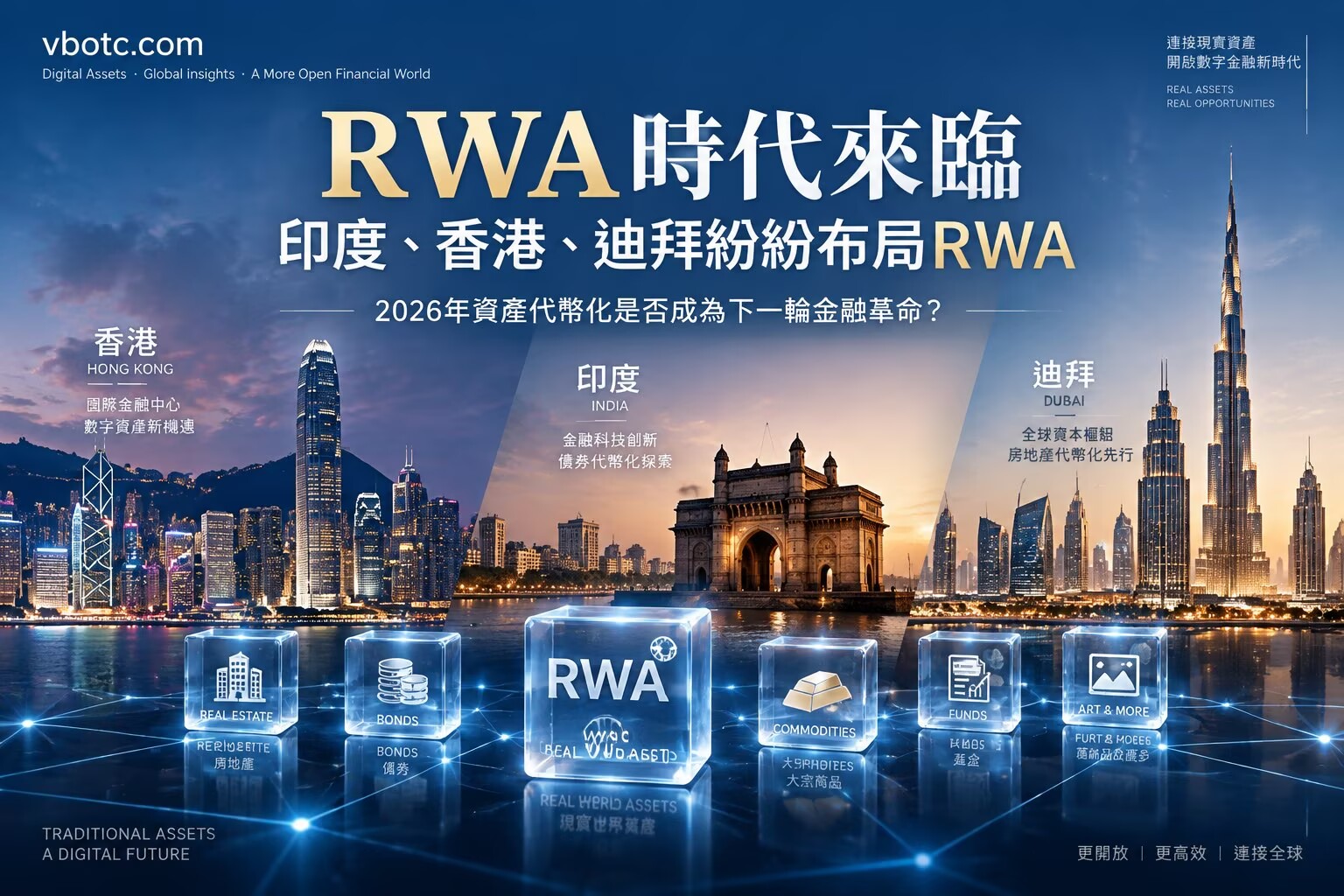
Blockchain has passed through several important stages: Bitcoin's digital-currency wave, stablecoin-enabled global digital payments and, now, traditional institutions exploring asset tokenisation. It is evolving from an investment tool into next-generation financial infrastructure.
Real-world asset tokenisation has become one of the most closely watched directions.
Property, bonds, funds, gold and other real assets are being digitally represented through blockchain to improve circulation.
Asian and Middle Eastern centres including Hong Kong, India and Dubai are developing RWA ecosystems.
What is RWA, and why are global institutions interested?
RWA uses blockchain to turn real-world assets into digital tokens that can be registered, traded and managed within digital finance.
Traditionally, assets such as property and bonds traded through established financial systems. RWA uses blockchain to improve asset flows and lower transaction costs.
For example, a US$100 million commercial property could be divided into many digital units, allowing more investors to participate without buying the entire asset.
RWA's main value is connecting traditional financial assets with blockchain, rather than creating new virtual assets.
Why are Hong Kong, India and Dubai developing RWA?
Hong Kong has mature capital markets, an established legal system and access to global investors.
It has continued building virtual-asset regulation to provide room for innovation while protecting financial security.
Regulation matters particularly for RWA. Tokenisation involves not just issuing a token, but confirming that the underlying asset exists and investors' rights are legally protected.
India is also exploring financial-asset tokenisation, including blockchain for corporate-bond issuance, trading and settlement.
Dubai draws on international capital and an active property market to explore real-estate tokenisation and attract global investors.
Stablecoins as an important RWA foundation
Although RWA focuses on digital representations of real assets, circulation still requires stable and efficient payment instruments.
This explains why stablecoins and RWA are often discussed together.
USDT, USDC and possible future regional stablecoins can provide more stable units of value and payment methods.
A future model could involve:
RWA digitising real assets;
Stablecoins handling payments and trades;
Blockchains recording ownership and clearing transactions.
Will RWA be the next financial revolution?
It is still at an early stage but is attracting growing traditional institutional attention.
RWA is more likely to upgrade traditional finance than replace it entirely.
Banks, funds and exchanges would retain risk management, compliance and asset management, while blockchain enables more efficient registration, faster trading and transparent asset circulation.
Conclusion
RWA is becoming a bridge between traditional finance and Web3.
Hong Kong, India and Dubai are exploring different approaches to gain an early advantage in the next digital-finance wave.
As regulation, stablecoin applications and blockchain infrastructure mature, tokenisation could become an important direction for global financial markets.
VBIT Hong Kong store enquiries
VBIT provides physical Crypto OTC services in Mong Kok, Tsim Sha Tsui, Causeway Bay and Kwun Tong. Trades are settled in HKD cash at our stores. USDT is available for cash out only; VBIT does not sell USDT to customers.
View store locations and contact VBIT or contact our official WhatsApp for a quote and an appointment.
