 VBIT Hong Kong


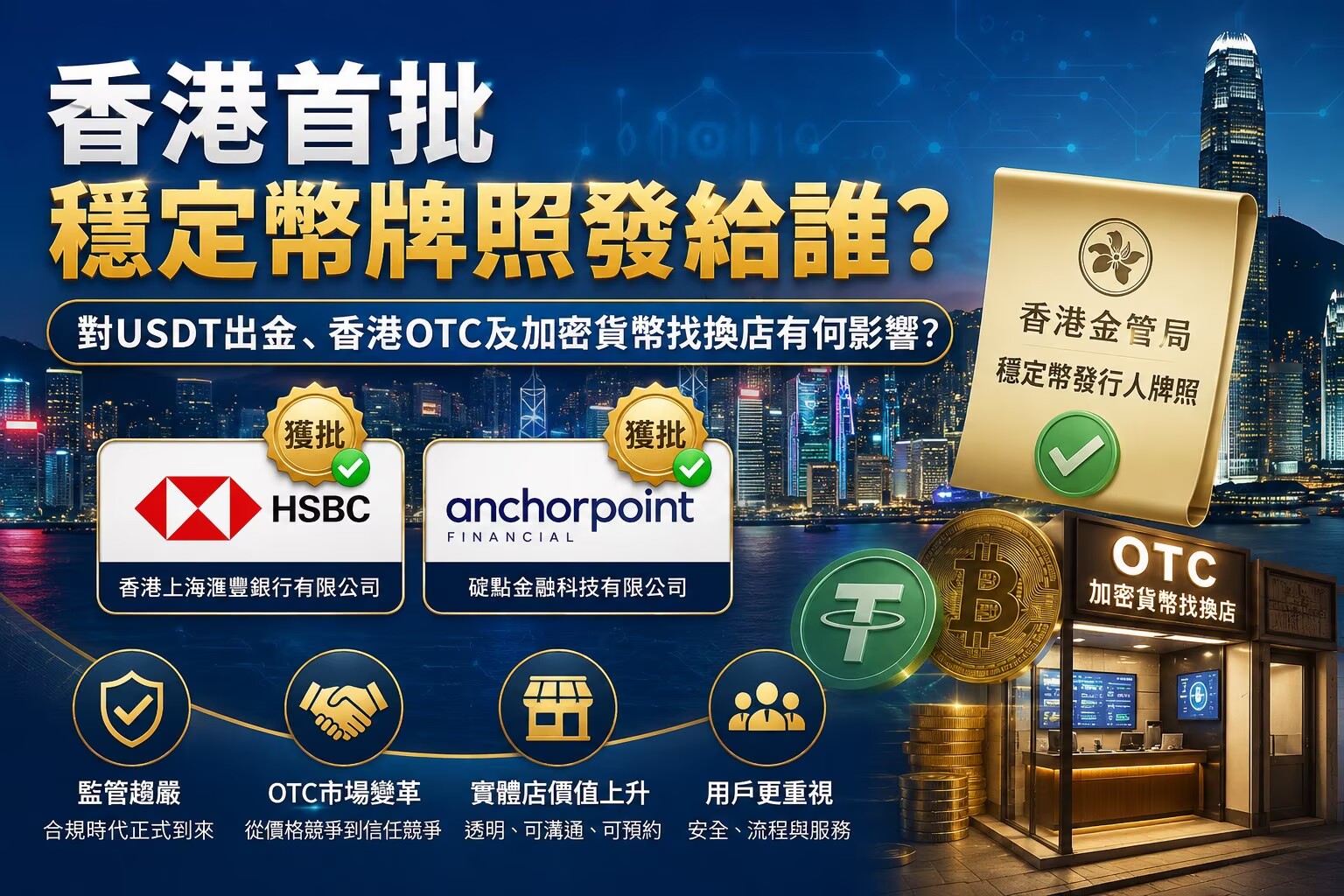
Who Received Hong Kong's First Stablecoin Licences? Implications for USDT Cash Out, OTC Services and Crypto Exchange Shops
On 10 April 2026, the Hong Kong Monetary Authority announced the first stablecoin-issuer licensees, HSBC and Anchorpoint (碇點金融科技). This is both a milestone in Hong Kong's stablecoin regulation and a development that will influence USDT cash out, USDT-to-HKD conversion, OTC services and cryptocurrency exchange shops.
For users seeking USDT cash out, Bitcoin OTC, Crypto OTC Hong Kong or physical cryptocurrency services, licensing signals a transition from early free circulation towards a market that prioritises compliance, transparency, risk management and physical service.
1. Hong Kong's first stablecoin licensees: HSBC and Anchorpoint
According to the HKMA's announcement, the first approved stablecoin issuers include The Hongkong and Shanghai Banking Corporation Limited and Anchorpoint (碇點金融科技有限公司). Market reports indicate strong competition, with only two approvals from about 36 applications, reflecting a cautious licensing approach.
This is more than approval for an ordinary Web3 project: it is a step towards incorporating stablecoins into regulated financial infrastructure. Unlike general crypto assets, stablecoins are closer to payment, settlement and value-transfer tools, so regulators focus particularly on reserves, redemption, AML arrangements, risk management and practical applications.
2. Two out of 36: Why were the first licences so difficult to obtain?
The first licences attract attention because they show the direction of Hong Kong's digital-asset regulation: financial stability, reserves and user protection take priority over speed alone.
Under the Stablecoins Ordinance and related requirements, issuers need adequate financial resources, sound reserve arrangements, independent custody, redemption mechanisms, audit disclosures, AML systems and risk-management capabilities. Issuing stablecoins is therefore a long-term financial-infrastructure business rather than an ordinary start-up project.
From a market perspective, two approvals from 36 applications also signal that Hong Kong's stablecoin market is more likely to be led by a few well-capitalised institutions with compliance experience and practical use cases than to become a crowded contest among many entrants.
3. Why do stablecoin licences affect USDT cash out?
USDT remains a widely used stablecoin in global crypto markets and a common medium for crypto-asset deposits and withdrawals, USDT-to-HKD conversion and Hong Kong OTC trades. The first licences do not mean USDT will immediately be replaced, but they will change how the market understands stablecoin credibility and transaction transparency.
When cashing out USDT or trading Bitcoin OTC in future, users may look beyond quotes to whether the transaction medium is clear, fund provenance can be explained, procedures are transparent and a physical store offers face-to-face communication.
Compliant stablecoins can improve market transparency and trust in the medium of exchange. As they enter payments, settlement and tokenised-asset use cases, Hong Kong OTC services will place more emphasis on fund-provenance explanations, transaction records and risk management.
4. How will stablecoin regulation change Hong Kong's OTC market?
First, competition will shift from price towards trust. Users have often prioritised rates and speed, but as regulation develops, service procedures, risk disclosures, KYC awareness, transaction records and genuine store premises will matter more.
Second, physical cryptocurrency shops will become more valuable. Users seeking USDT-to-HKD conversion, Bitcoin OTC or larger crypto-asset exchanges can discuss arrangements, book visits, confirm quotes and understand procedures face to face. Physical stores can build trust more readily than temporary channels whose identities cannot be verified.
Third, users will place more weight on providers' long-term stability. Hong Kong OTC is evolving from short-term transaction provision towards compliance awareness, communication and brand trust. Stable operations and clear procedures matter more than a one-off low price to users with recurring deposit and withdrawal needs.
For physical Hong Kong crypto-asset exchange brands such as VBIT OTC, the signal is clear: future competition will involve not only quotes but also in-person service, transparency, customer communication and risk awareness.
5. What should users look for in a Hong Kong cryptocurrency exchange shop?
First, genuine physical premises. For USDT cash out, USDT-to-HKD conversion or Bitcoin OTC in Hong Kong, a real store provides a clearer setting for communication and lets customers understand procedures and precautions before trading.
Second, clear procedures. A professional exchange shop should explain its quotation method, exchange process, required information, receipt arrangements and risks before a trade. Clearer procedures make it easier to assess whether a service meets your needs.
Third, attention to KYC and risk management. As Hong Kong's stablecoin and virtual-asset markets become more regulated, identity verification, AML awareness and record retention will become increasingly important. These are part of market maturity rather than unnecessary inconvenience.
Fourth, stable service. Users with long-term asset-allocation, recurring USDT deposit and withdrawal, or Bitcoin exchange needs should consider providers with stable operations, timely responses and clearly identified stores, rather than focusing solely on a single quote.
6. VBIT OTC's view of stablecoin licensing and Hong Kong's OTC market
VBIT OTC will continue following developments in stablecoin regulation and virtual assets. Its existing in-store services emphasise transparent procedures, communication, risk disclosures and the customer experience, helping users better understand USDT cash out, Bitcoin OTC and crypto-asset exchange processes.
As stablecoin licensing is implemented and the virtual-asset market becomes more regulated, users choosing an OTC provider should focus on genuine premises, clear procedures, stable communication and risk-management awareness.
7. Frequently asked questions
1. Who received Hong Kong's first stablecoin licences?
The HKMA granted the first stablecoin-issuer licences to institutions including The Hongkong and Shanghai Banking Corporation Limited and Anchorpoint (碇點金融科技有限公司), marking a new phase of licensed stablecoin issuance in Hong Kong.
2. How do the licences affect USDT cash out?
USDT remains common in the short term. As Hong Kong-licensed stablecoins launch, however, users cashing out USDT, converting USDT to HKD or trading OTC will pay closer attention to the transaction medium, fund provenance, transparency and providers' risk-management capabilities.
3. Will stablecoin licensing change Hong Kong's OTC market?
Yes. It will place greater emphasis on compliance, transparency and standardised processes. Users should look beyond exchange rates to physical premises, clear procedures, KYC and risk disclosures.
4. Should USDT cash-out users choose online channels or physical stores?
For people who need face-to-face discussion, quote confirmation, explanations or larger crypto-asset exchanges, physical Hong Kong stores can offer a clearer experience. Their value lies in communication, appointments and greater process transparency.
Conclusion: Transparency and trust matter more in the era of compliant stablecoins
The first licences represent more than two institutional approvals: Hong Kong's digital-asset regulatory framework is moving from design into implementation. For ordinary users, this will gradually affect standards for USDT cash out, USDT-to-HKD conversion, Bitcoin OTC and cryptocurrency exchange services.
Users should ask not only about exchange rates but also whether the store is genuine, procedures are clear, communication is stable and risk disclosures are adequate. As stablecoin and virtual-asset markets become more regulated, physical premises, standard procedures and long-term service capacity will become increasingly important.
If you are exploring USDT cash out, USDT-to-HKD conversion, Bitcoin OTC or exchange-shop services in Hong Kong, visit VBIT OTC's official website for store locations, opening hours and appointment information.
VBIT OTC has multiple physical Hong Kong stores offering face-to-face enquiries and appointments for crypto-asset exchange. As stablecoin and OTC markets become more regulated, choosing a brand with clear processes, dependable communication and genuine premises will matter increasingly.
VBIT Hong Kong store enquiries
VBIT provides physical Crypto OTC services in Mong Kok, Tsim Sha Tsui, Causeway Bay and Kwun Tong. Trades are settled in HKD cash at our stores. USDT is available for cash out only; VBIT does not sell USDT to customers.
View store locations and contact VBIT or contact our official WhatsApp for a quote and an appointment.
