 VBIT Hong Kong


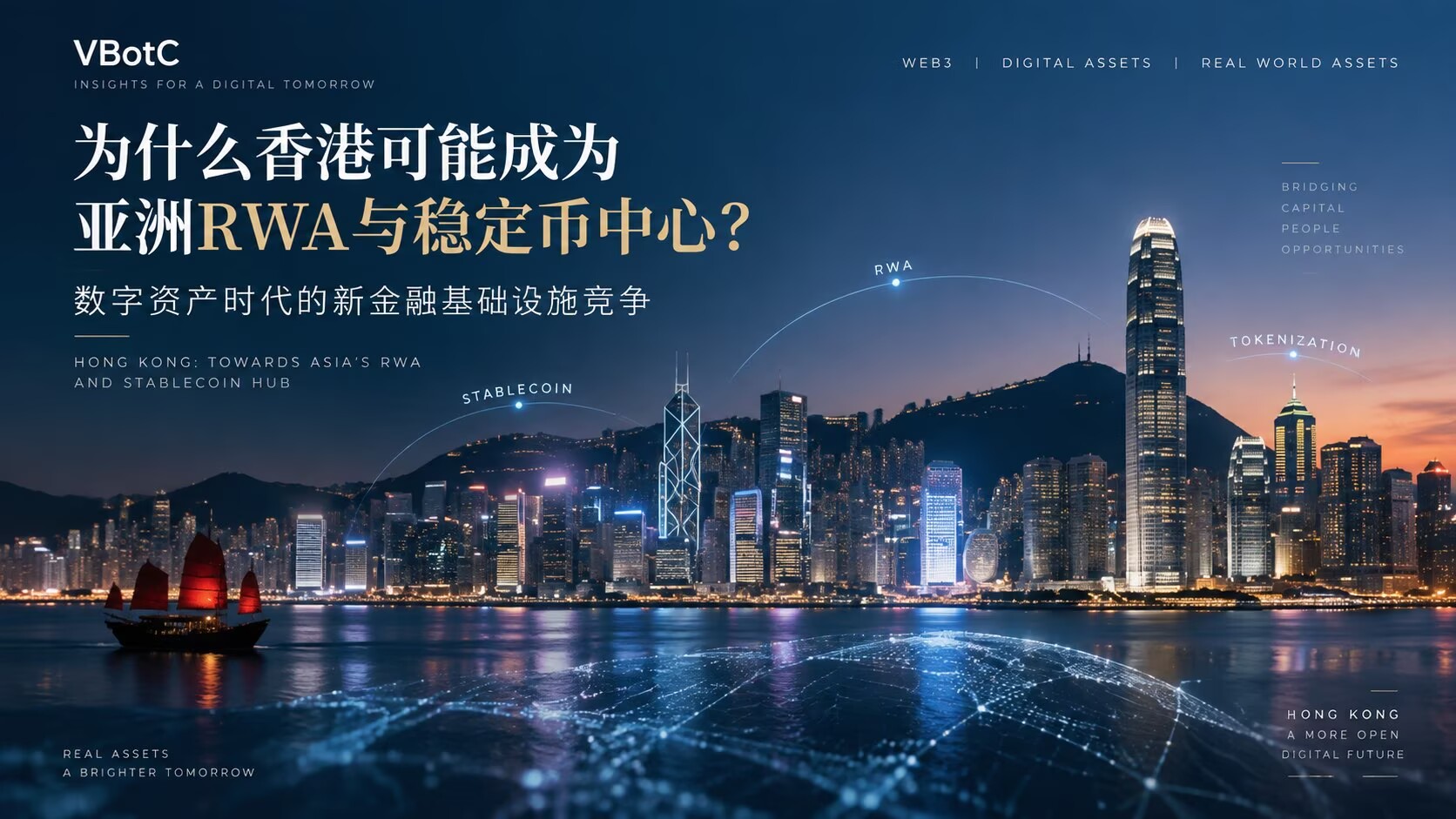
Introduction: Digital-asset competition is entering the financial-infrastructure era
In recent years, digital assets have moved from market exploration towards institution-building. Early attention centred on Bitcoin, crypto trading and blockchain applications; the focus is now shifting to using blockchain to transform traditional finance.
Real-world asset (RWA) tokenisation and stablecoins are becoming central to the next phase of digital finance. Hong Kong's international financial position, mature capital markets and connections between Asian and global capital support its exploration of an Asian innovation-hub role.
1. RWA: Connecting traditional assets with blockchains
RWA digitally represents real-world assets through blockchain so they can be issued, traded and managed on-chain. Property, bonds, fund units, gold and corporate assets are potential tokenisation candidates.
RWA can improve liquidity, lower transaction costs and increase asset-management transparency. As institutions explore digital securities and tokenised assets, it is becoming an important route for traditional finance into blockchains.
2. Why does Hong Kong have particular RWA advantages?
RWA requires more than blockchain: it needs mature markets, effective laws and stable regulation. Hong Kong has developed capital markets, international investors and substantial cross-border financial experience.
Its main advantage over technology-only markets is the ability to connect digital innovation with traditional finance. It could become a platform linking digital-asset businesses, institutions and global capital.
3. Stablecoins: Payment infrastructure for digital finance
Stablecoins are digital assets designed to maintain a stable relationship with fiat currency, providing efficient digital payments and settlement.
They are essential RWA infrastructure. If real assets trade on blockchains, the market needs a stable and efficient digital medium of exchange. Stablecoin development will therefore directly influence adoption at scale.
4. Hong Kong stablecoin regulation supports the ecosystem
Hong Kong has improved virtual-asset regulation and explored stablecoin-issuance rules. Requirements covering issuers, reserves, risk management and investor protection aim to balance financial security with innovation.
A clear framework reduces institutional uncertainty and supports stablecoin payments, RWA trading and digital-finance applications.
5. A potential complete Hong Kong digital-finance ecosystem
Hong Kong could develop an integrated value chain around digital-asset infrastructure, stablecoin payments and RWA products.
Infrastructure includes wallets, custody, blockchains and trading platforms; payments include stablecoin settlement and cross-border transfers; assets include tokenised bonds, funds and other real-world holdings.
This ecosystem would further integrate traditional finance and blockchain.
6. Challenges remain for RWA and stablecoins
Despite its advantages, Hong Kong must address issues including the legal relationship between real and on-chain assets, market liquidity and international regulatory coordination.
Only sound legal, technical and market systems can move digital assets from concept to widespread use.
Over the next decade, finance may see substantial shifts towards digital assets, digital payments and on-chain trading. Digital assets will gradually become part of finance rather than simply replace it. With its financial foundations, regulatory capabilities and international links, Hong Kong is exploring a central Asian role in RWA and stablecoins and may play a larger part in global digital-finance competition.
VBIT Hong Kong store enquiries
VBIT provides physical Crypto OTC services in Mong Kok, Tsim Sha Tsui, Causeway Bay and Kwun Tong. Trades are settled in HKD cash at our stores. USDT is available for cash out only; VBIT does not sell USDT to customers.
View store locations and contact VBIT or contact our official WhatsApp for a quote and an appointment.
