 VBIT Hong Kong


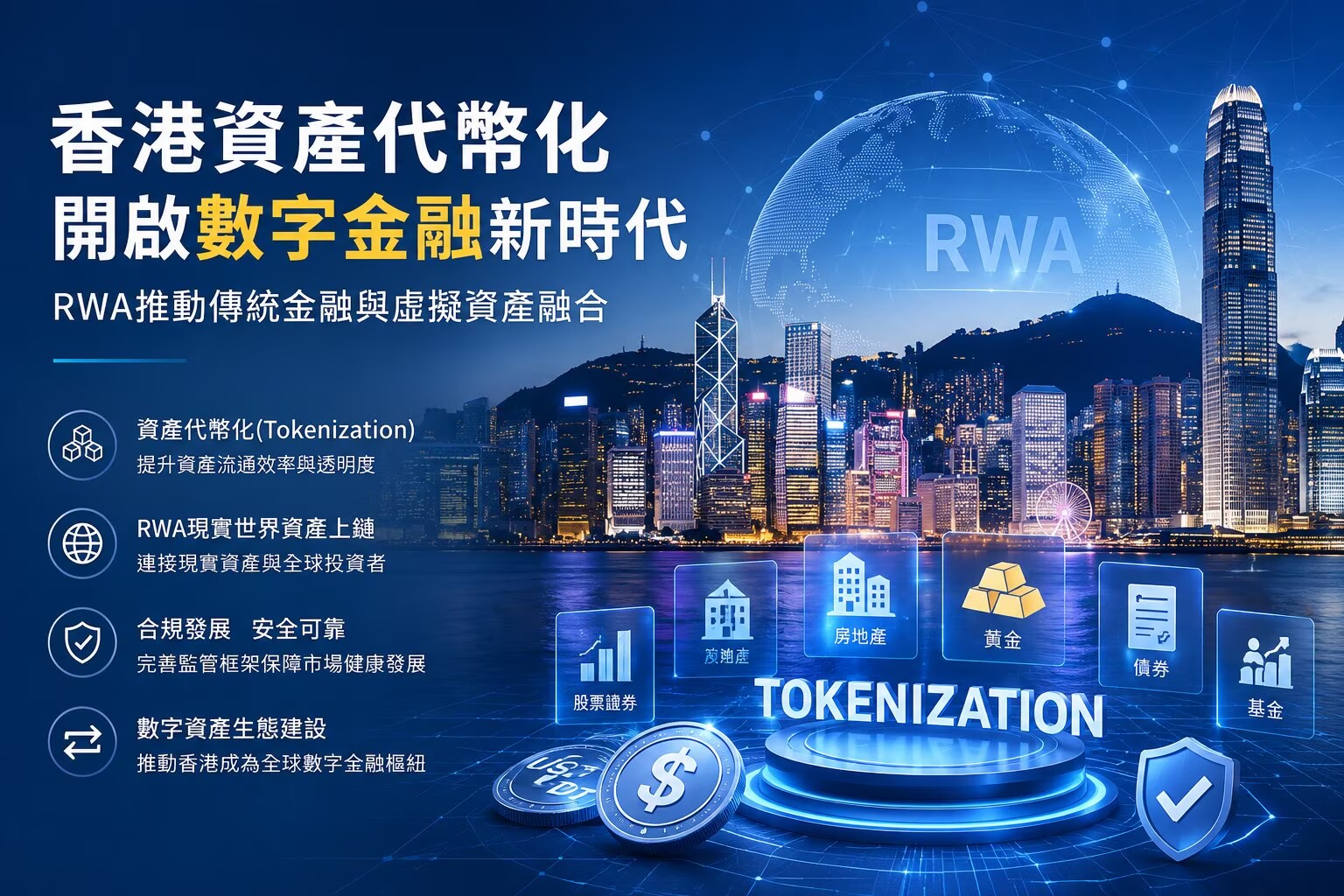
As global finance becomes more digital, Hong Kong's digital-asset market is entering a new phase. The city has strengthened virtual-asset regulation and explored blockchain applications in traditional finance, with asset tokenisation becoming an important connection between traditional and digital assets.
From stablecoins and digital securities to real-world asset (RWA) tokenisation, Hong Kong is building a more complete digital-finance ecosystem with efficient, secure and transparent asset circulation for global investors.
1. What is asset tokenisation?
Asset tokenisation uses blockchain to represent rights in real-world assets digitally, enabling them to be recorded, managed and circulated through digital networks.
Simply put, blockchain gives traditional assets a digital representation.
Current applications include:
- Digital representations of equities and securities;
- Tokenised funds;
- Digital bond issuance;
- Bringing real-world assets such as property on-chain;
- Trading digital financial products.
Compared with traditional finance, tokenised assets can improve registration efficiency and transparency while reducing some process costs.
2. Why is Hong Kong integrating digital assets and traditional finance?
Hong Kong has actively explored fintech innovation as an international financial centre while progressively establishing a virtual-asset framework.
Recent ecosystem development has focused on:
- Regulation of virtual-asset trading platforms;
- Stablecoin regulation;
- Digital securities;
- Real-world asset applications.
These areas continue to support the digital-finance ecosystem.
As regulation becomes clearer, digital assets are moving beyond their early investment role towards financial infrastructure.
They may eventually serve not only crypto investors but also connect traditional institutions, corporate assets and global investors.
3. RWA tokenisation as a new digital-finance trend
Real-world assets have become an important focus of global digital-asset markets.
RWA refers to using blockchain to represent assets such as property, gold, bonds, funds and corporate assets digitally.
For financial markets, this creates more flexible ways for traditional assets to circulate digitally.
For investors, tokenisation may improve product transparency and accessibility.
4. Hong Kong's ecosystem creates demand for supporting services
Demand for basic digital-asset services is growing as Hong Kong's market develops.
The market will need more than trading platforms, including improved:
- Digital-asset exchange services;
- Fiat-to-virtual-asset conversion channels;
- Stablecoin circulation services;
- User asset-management support.
With stablecoins such as USDT widely used, safe, efficient and transparent circulation channels are an important part of the market.
5. Compliance as a core direction for Hong Kong virtual assets
As regulation develops, the industry is moving from early experimentation towards more standardised operations.
When selecting digital-asset services, investors should consider:
- Whether the provider has standardised operating systems;
- Whether transaction procedures are transparent;
- Whether users' assets are adequately protected;
- Whether service procedures meet local regulatory requirements.
Compliance, security and customer experience will become important competitive factors.
VBIT Hong Kong store enquiries
VBIT provides physical Crypto OTC services in Mong Kok, Tsim Sha Tsui, Causeway Bay and Kwun Tong. Trades are settled in HKD cash at our stores. USDT is available for cash out only; VBIT does not sell USDT to customers.
View store locations and contact VBIT or contact our official WhatsApp for a quote and an appointment.
